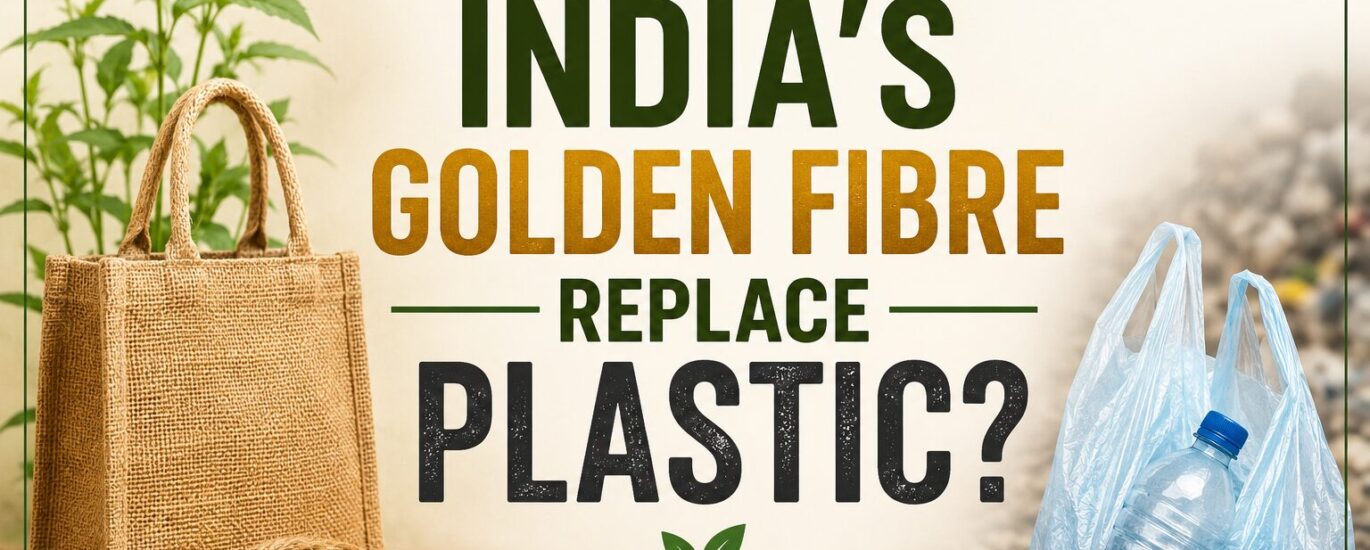
Plastic pollution is no longer just an environmental issue—it is a global economic and public health concern. From oceans to food chains, plastic has become deeply embedded in modern life. As countries search for alternatives, one traditional material is making a strong comeback: jute, often called India’s “Golden Fibre.”
But can jute realistically replace plastic, not just in India but across global markets like the United States?
Understanding Jute and Its Relevance Today
Jute is a natural fiber primarily grown in India and Bangladesh. For decades, it has been used in packaging, ropes, and textiles. What makes jute relevant today is its environmental profile—it is biodegradable, compostable, and far less harmful compared to synthetic materials.
At a time when sustainability is becoming a priority for governments and consumers alike, jute fits naturally into the conversation.
India’s Position in the Jute Economy
India is the largest producer of jute in the world, with West Bengal at the center of cultivation and processing. The sector supports millions of farmers and workers, making it economically significant as well.
Government policies have also played a role in sustaining demand. The mandatory use of jute in packaging food grains and sugar has ensured steady consumption. At the same time, restrictions on single-use plastics have indirectly created more space for alternatives like jute.
However, despite these advantages, jute remains underutilized when compared to its full potential.
The Global Shift: Focus on the United States
The conversation around sustainability is particularly strong in developed economies like the United States. Consumers are becoming more conscious of their environmental impact, and businesses are responding by exploring eco-friendly packaging solutions.
Reusable bags, biodegradable materials, and sustainable sourcing are no longer niche ideas—they are becoming part of mainstream business strategy.
This creates an opportunity for jute. As a natural, durable, and reusable material, it fits well within this shift. Many retailers and small businesses in the U.S. have already started experimenting with jute-based products, especially in packaging and lifestyle segments.
Still, the transition is gradual. Plastic continues to dominate due to its low cost and wide range of applications.
The Practical Limitations of Jute
While jute has clear environmental benefits, it is not a perfect substitute for plastic.
First, it lacks water resistance, which limits its use in certain types of packaging. Second, it is generally more expensive than plastic, especially in price-sensitive markets. Third, plastic’s versatility across industries—from healthcare to electronics—cannot be matched by jute.
These limitations mean that jute can only replace plastic in specific areas, not across the board.
Where Jute Can Make a Real Impact
Jute is most effective in sectors where sustainability matters more than extreme durability or technical performance.
This includes shopping bags, packaging materials, agricultural use, and lifestyle products. In these areas, it can significantly reduce dependence on single-use plastics.
With better design, improved processing, and stronger branding, jute products can also appeal to premium markets, especially in countries like the United States where consumers are willing to pay more for environmentally responsible choices.
A Strategic Opportunity for India
For India, jute is more than just an alternative material—it is a strategic asset.
With the right investments in technology, quality improvement, and global marketing, India can position itself as a leading supplier of sustainable fiber products. Export-focused growth, particularly targeting environmentally conscious markets, can unlock new economic opportunities.
The challenge lies in modernization. Without improving efficiency and product quality, jute risks remaining limited to traditional uses.
Final Thought
Jute is not a complete replacement for plastic, and it does not need to be. The real opportunity lies in reducing plastic use where alternatives are practical and scalable.
India’s Golden Fibre has the potential to play a meaningful role in this transition. As global demand for sustainable materials grows—especially in markets like the United States—jute can move from being a traditional commodity to a modern solution.
The shift will not happen overnight, but the direction is clear. The future will belong to materials that balance utility with sustainability, and jute is well positioned to be one of them.

 Buy on Amazon